 简体中文
简体中文 English
 Deutsch
 Português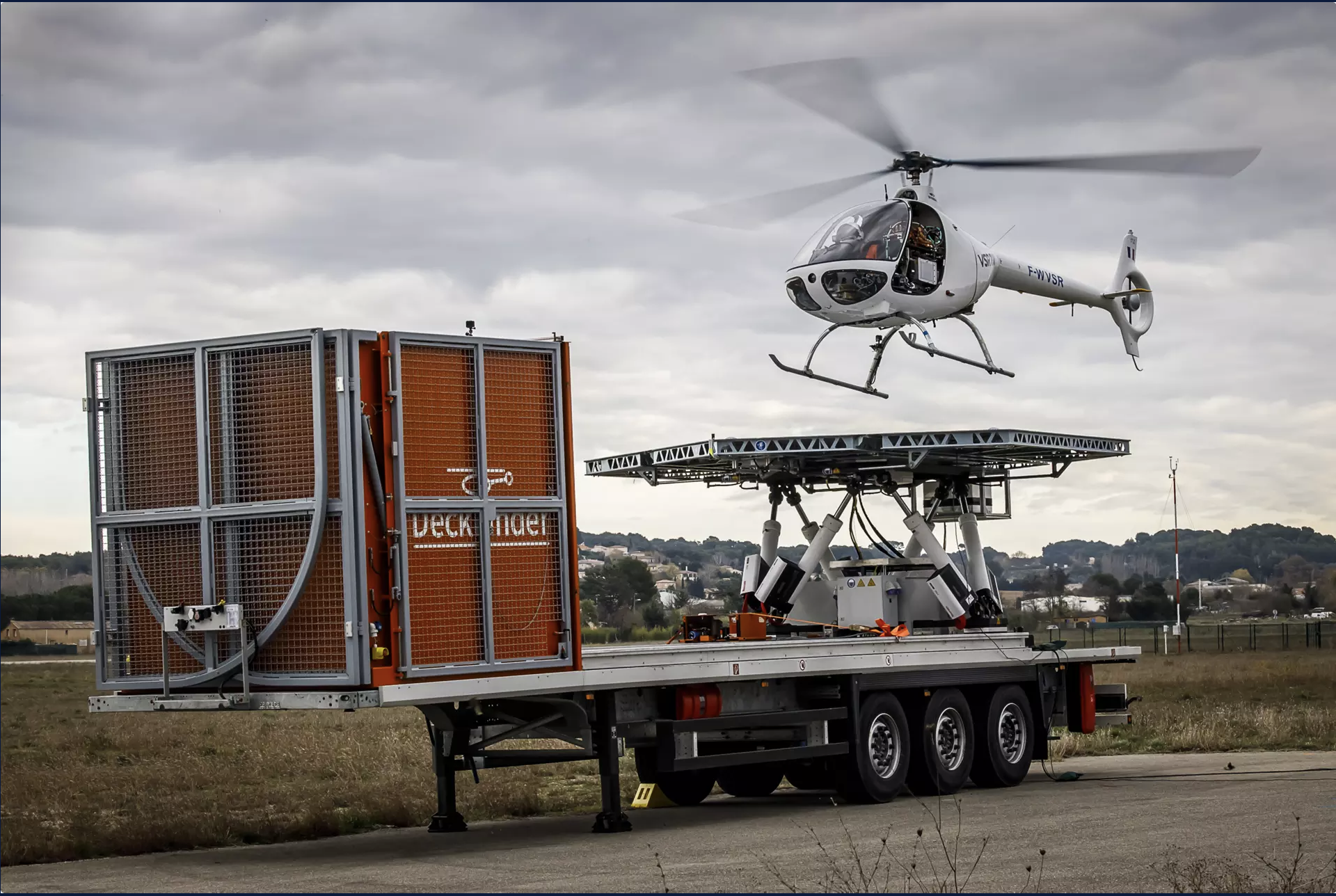
Heligrid for drone testing in airbus’ Deckmotion simulator
Heligrid for Drone Testing in Airbus’ DeckMotion Simulator
To develop safe autonomous deck landings at sea, you first need a reliable way to simulate a moving ship’s deck on land. Airbus’ VSR700 programme does exactly that, using its DeckMotion Simulator: a moving platform that reproduces the pitch and roll of a naval vessel.
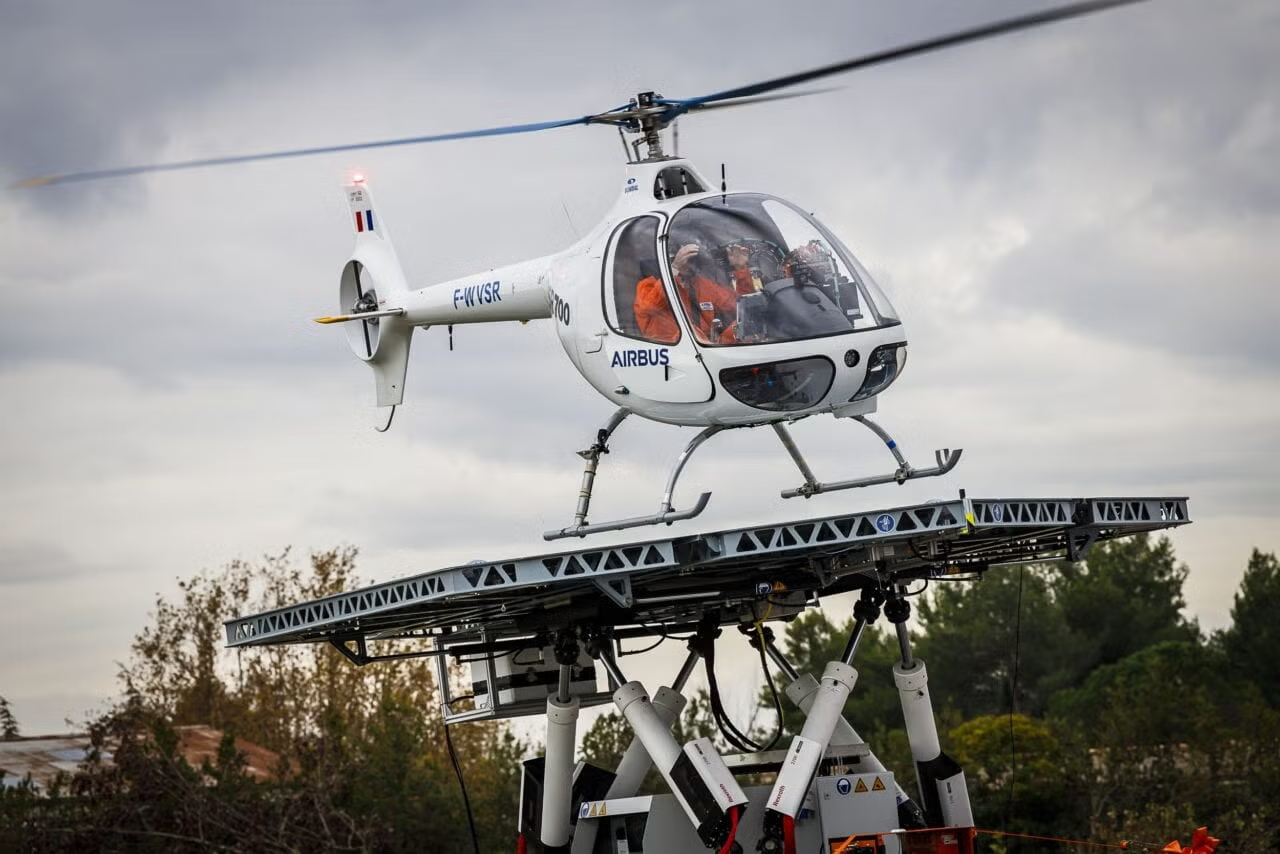
For this simulator, Cramm HLS supplied a Heligrid for drones, creating a realistic landing surface similar to the grids used on actual ship decks. Heligrid is an anchoring platform that allows helicopters and UAVs equipped with a harpoon system to land and take off safely, even in rough sea conditions and high winds.
In the DeckMotion setup, the VSR700 drone and its optionally piloted test vehicle perform autonomous takeoff and landing (ATOL) manoeuvres on a pad that is constantly moving, while Airbus’ DeckFinder local positioning system provides centimetre-level position data to the autopilot. This combination enables engineers to validate flight control laws and landing procedures long before sea trials, where the same drone will operate from frigates and other naval ships.
By integrating Heligrid into this simulator environment, Cramm HLS supports the next generation of naval unmanned systems. The same core idea that drives Heligrid at sea – secure, repeatable landings on compact moving decks – is now helping to advance autonomous operations for drones like the VSR700 in missions such as maritime security, search and rescue, and ISTAR.
Supporting the future of autonomous deck landings
Summary
- Heligrid for drones used in Airbus’ DeckMotion Simulator.
- Realistic moving ship deck landing surface.
- Enables autonomous takeoff and landing tests.
- Made with STANAG 1276 requirements
- Supports safe, repeatable landings in harsh conditions.
- Contributes to next-generation naval drone operations.